Turning 6 months of design misdirection into an efficient design system
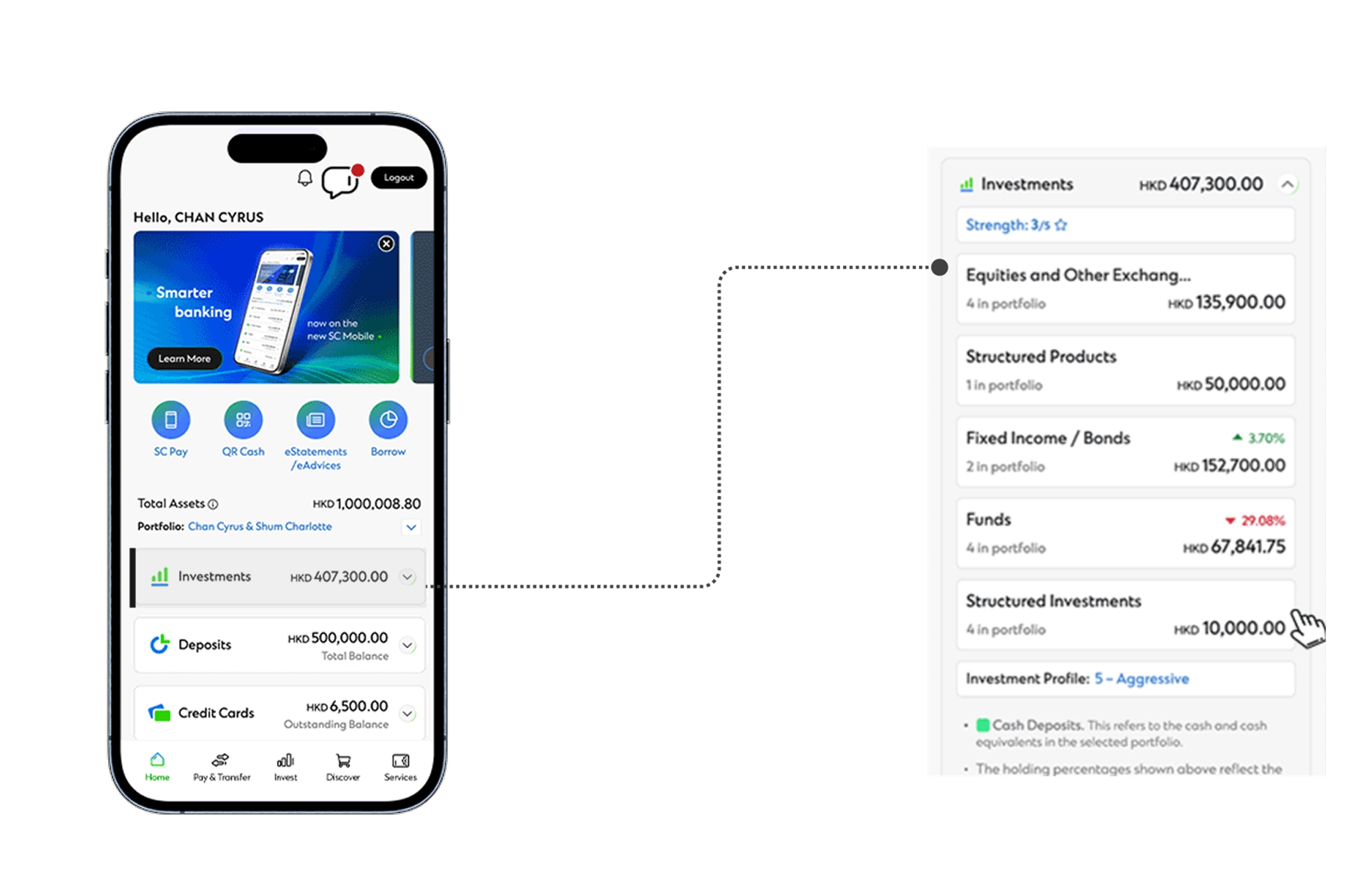
For six months, I focused on a UI refresh, improving visual consistency and aligning the app with brand guidelines. As the work progressed, it became clear the real issues were not visual but structural, rooted in navigation and information architecture. What started as a surface update exposed the need for a fundamental rethink of the product.
Analysing standard chartereds site across various markets
An analysis of 3 markets standard chartered operates in.
To solve these, I designed the foundations of a new design system, focusing on a structually cohesive navigation system, a shared foundation for component design and two new cards aimed at discovery and action.
Two cards, two powerful systems
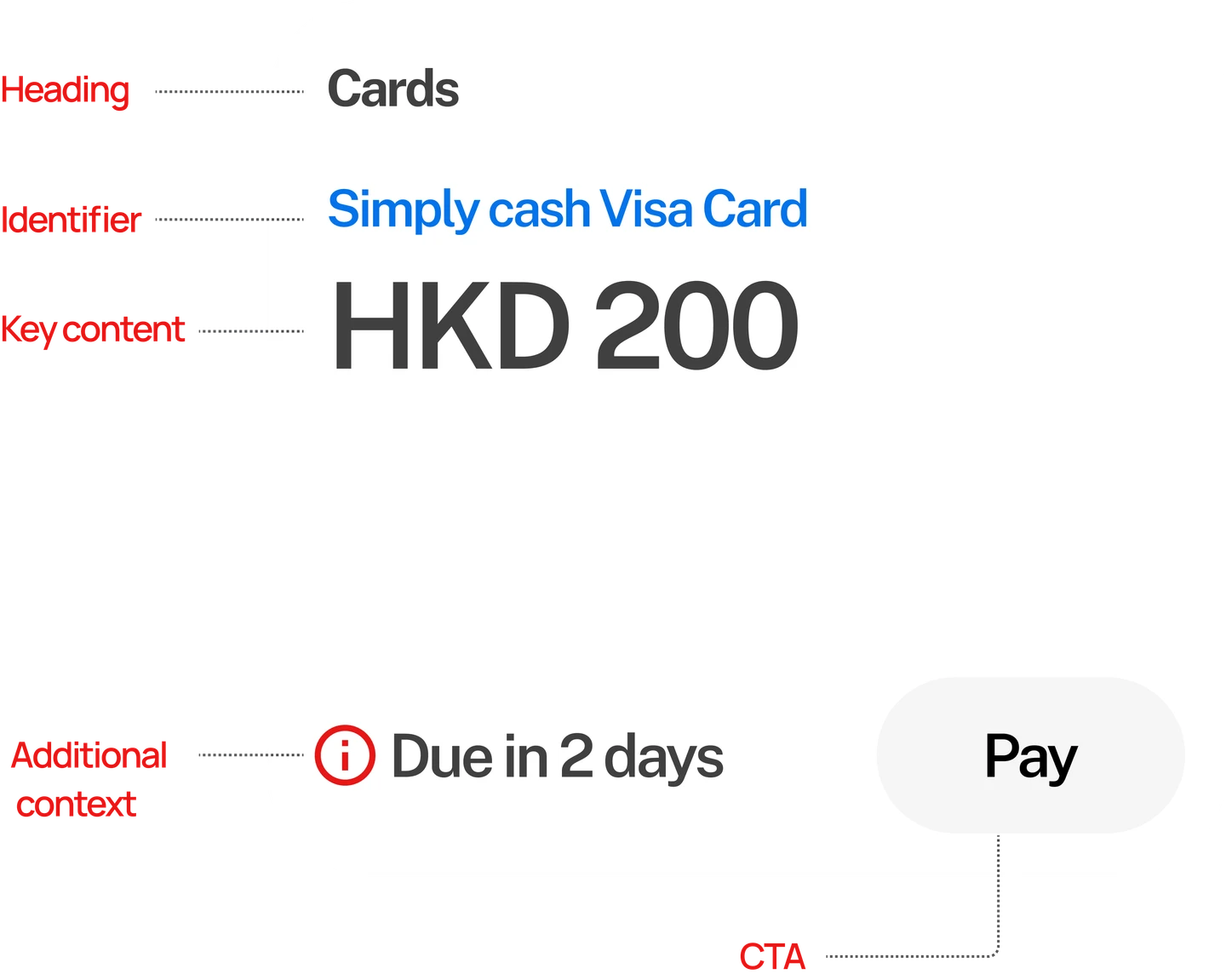
To capture some of the intents users have, I designed two card systems. The action card focused on speed, condensing high level, complex user flows into a few simple taps. The information card focused on journeys, providing immersive experiences to users and moving them towards high level actions.


Expanding information cards
Information cards on Standard Chartered’s website appear effective at a glance, surfacing offers and promotions in a clean, scannable format. However, their reliance on redirects disrupts user flow, pulling users out of context and turning simple exploration into fragmented navigation. This creates unnecessary friction at key decision-making moments.

Designing a fluid browsing experience
To create a more fluid browsing experience, I introduced a bottom sheet that reveals extended information directly from the card. By keeping users within the same context, this eliminates disruptive page transitions and allows for continuous, uninterrupted exploration.